Metal Fatigue: Red for Electrical
Nida Ekenel
2025 Fall Residency



ABOUT THE PROJECT
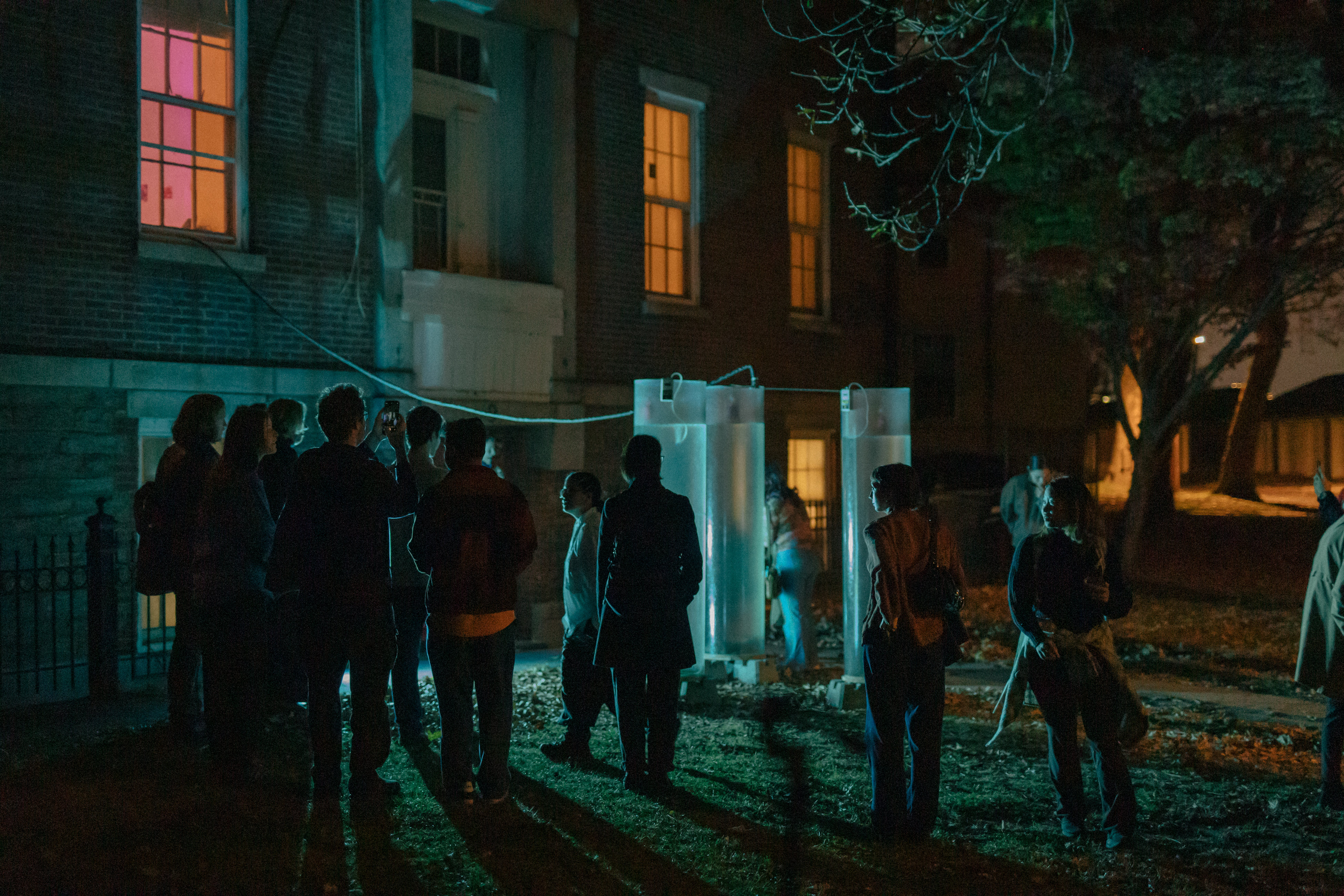
Governors Island’s electrical body is unusually exposed. Roads are lined with markings—yellow for gas, blue for water, green for sewage, red for electrical—tracing where energy should go and where it must not. Along the West Way, six-by-twelve-foot concrete boxes are being lowered into the ground, each carrying high-voltage wires buried nine feet deep. “Four a day, forty-two in total,” Juan, one of the construction workers, tells me, with other work continuing until January 2026. Beneath the asphalt, a new nervous system takes shape: conduits stretching outward, substations pulsing to life, electricity extending its reach—all in service of the island’s new trajectory of ongoing developments. Technology answering a question still unresolved.
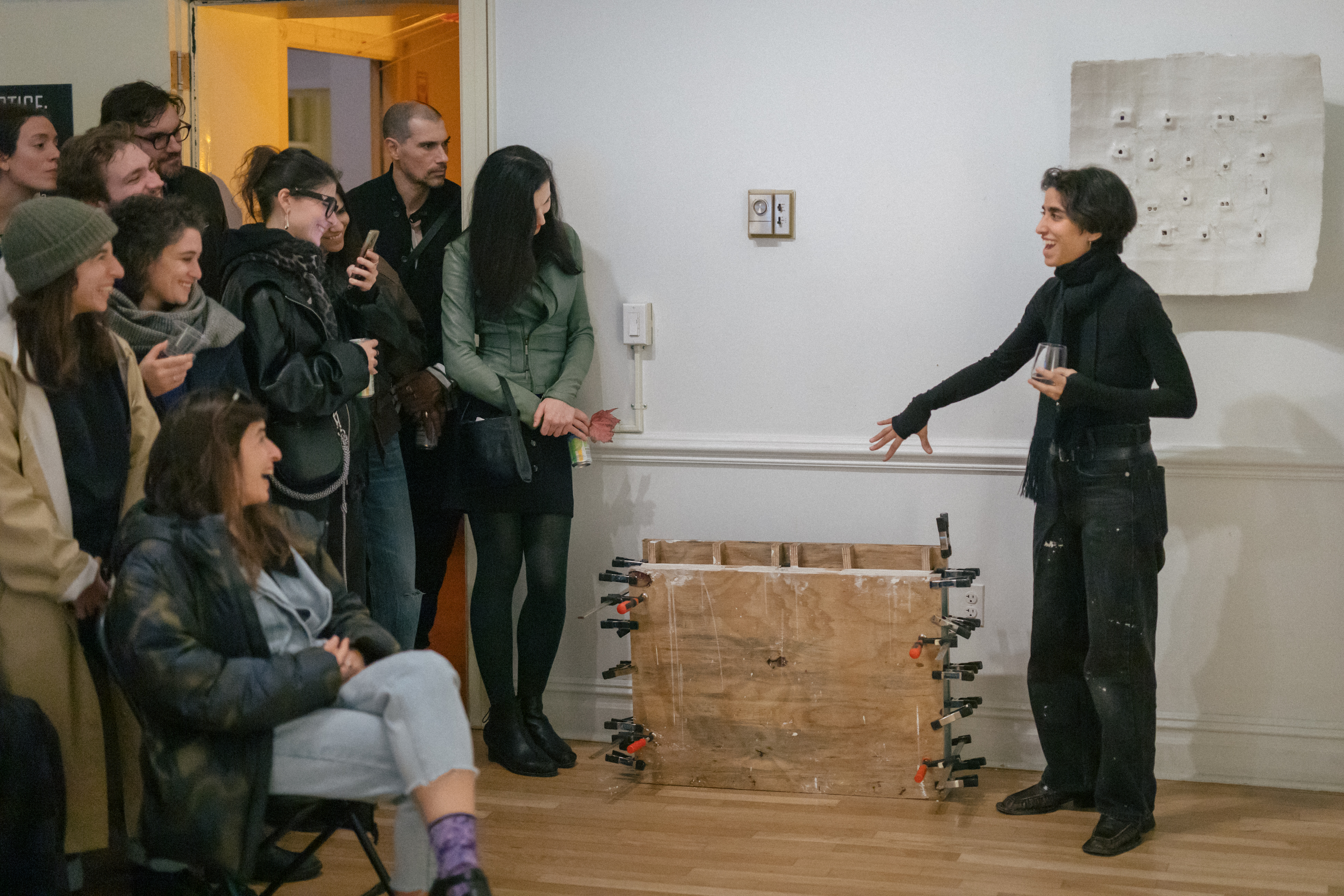
Metal Fatigue begins where those systems end: at the wall. Behind its ten-foot-high surface, metal studs tear off sixteen inches on center; conduits and cables compose the unseen skeleton of architecture. Here, they bend unconventionally, fold for connection, and misalign toward coherence. Another wall is cast with its own structure—its studs, gypsum, and electrical infrastructure fused into one body. In these sculptures, construction materials lose their discipline; and perhaps, when they forget their function long enough, they begin to imagine.
The space through which electricity extends becomes charged — literally and metaphorically — with incompatible voltages. What is normally hidden becomes form; what was meant to connect begins to stutter. The system becomes uncertain—part infrastructure, part organism—its logic somewhere between skin and bone, between hairs and pore.
Metal Fatigue begins where those systems end: at the wall. Behind its ten-foot-high surface, metal studs tear off sixteen inches on center; conduits and cables compose the unseen skeleton of architecture. Here, they bend unconventionally, fold for connection, and misalign toward coherence. Another wall is cast with its own structure—its studs, gypsum, and electrical infrastructure fused into one body. In these sculptures, construction materials lose their discipline; and perhaps, when they forget their function long enough, they begin to imagine.
The space through which electricity extends becomes charged — literally and metaphorically — with incompatible voltages. What is normally hidden becomes form; what was meant to connect begins to stutter. The system becomes uncertain—part infrastructure, part organism—its logic somewhere between skin and bone, between hairs and pore.
COLLABORATORS/SUPPORT
My deepest gratitude to Hiroshi, who helped me move to the island—twice; to Carlos and Felipe from the Beam Center and Juan from electrical Gianfia Corp. for answering every question with such generosity; to Tristan from Governor’s Island Night Security for always accommodating my needs; to R, who convinced me to accept the residency; and to Deborah, our IPA Residency Director, for her insightful feedback and infectious enthusiasm. And to Sine, Martha, Julia, Sofia, and Yitian — thank you for bringing such warmth, laughter, and energy to life on this island. This work would not have been possible without each of you. Thank you.
People